
How Arooba’s interactive sensory tools are changing lives in Palestine
published: 22 April 2026

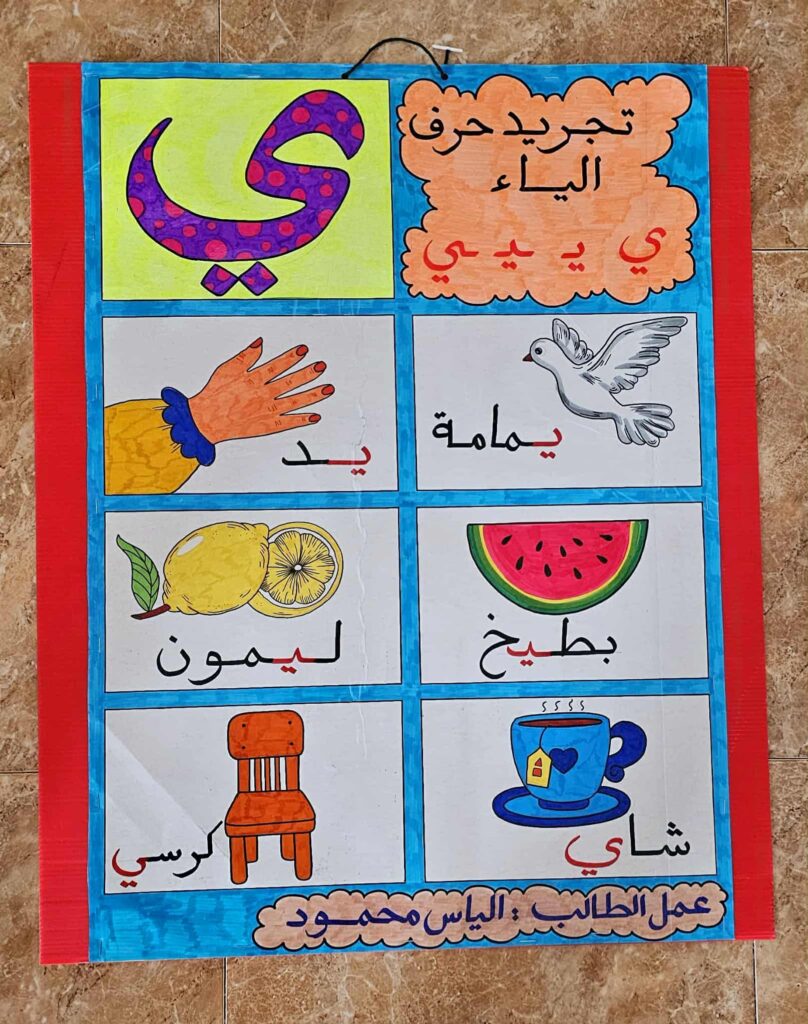 Thanks to your donations, children with disabilities in Palestine are learning, exploring and developing their skills through new sensory tools designed in collaboration with Palestinian artist Arooba Amair.
Over the last year, we’ve introduced Arooba’s custom-made sensory tools across all six of our centres, and children are now benefiting from them in their rehabilitation. ABCD trustee and project manager Firas explains how the collaboration began, how these tools are used in therapy sessions, and what plans lie ahead
Arooba is a Palestinian artist who we’ve been working with for a little over a year, who designs and produces sensory learning tools like puzzles and other interactive learning toys. Her creations are wonderful because they are designed specifically to support children with physical and learning disabilities, including children with cerebral palsy, Down syndrome and other developmental conditions.
Her creations are making a real difference. Children love playing with them, and the bright colours and interactivity make it more fun to learn, helping children practise movement and communication through stimulating visuals, sound, and touch.
Designing a flexible tool for all
 We started working with Arooba over a year ago, shortly before launching our animated educational video project. To come up with our ideas, we research existing sensory tools, sharing photos of the kit in hospitals and rehabilitation settings, and then meet with Arooba to explore how these might benefit the children in our centres. Throughout the process, we consult closely with our centres’ therapists to ensure each tool is practical and safe. We also assess their versatility, checking whether they work for children of different ages, abilities, and learning speeds. It’s important to understand how each tool supports children with visual-, hearing-, or speech-related difficulties
After this, Arooba can get to work developing her designs, creating puzzles, boards and interactive learning tools that the children in our centres will eventually be able to play with.
Practising letters, numbers and colours
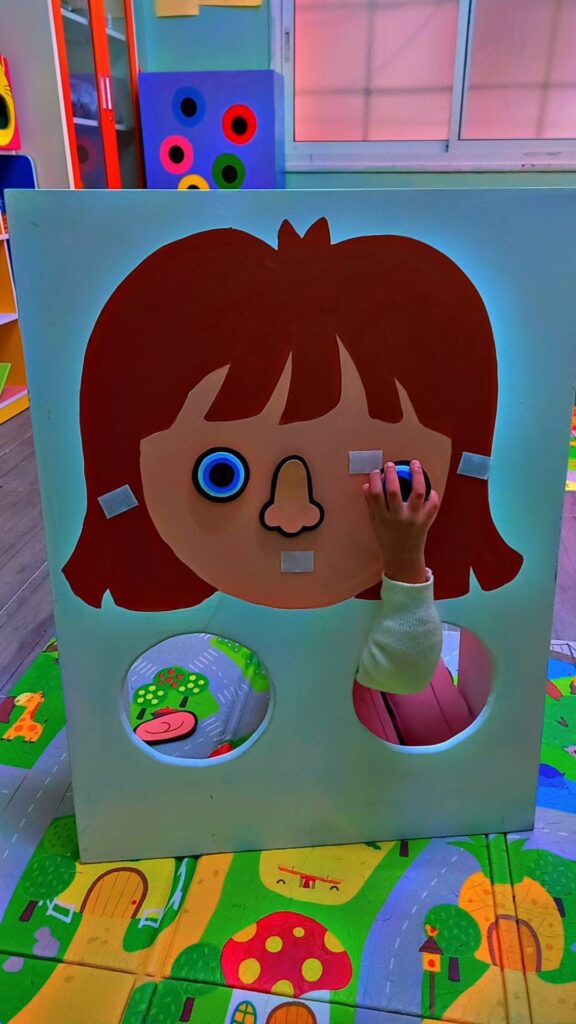
The first thing Arooba created for us was a series of educational boards, which we distributed across all six of ABCD’s rehabilitation centres in 2025. The boards introduce important concepts like the four seasons, parts of the body, and routines like brushing their teeth or combing their hair. She’s also developed new puzzles and learning tools that help children practise letters, numbers, colours and objects. Some items can even attach to wheelchairs, helping children using mobility aids interact more easily with their environment.
Looking ahead, we’re excited to create a series of learning resource books for therapists to use during rehabilitation. These books will cover topics such as literacy, numeracy, hygiene, and daily routines. Like the sensory tools, they will be shared across all ABCD centres to reach as many children as possible.
Finding new ways to support children with disabilities
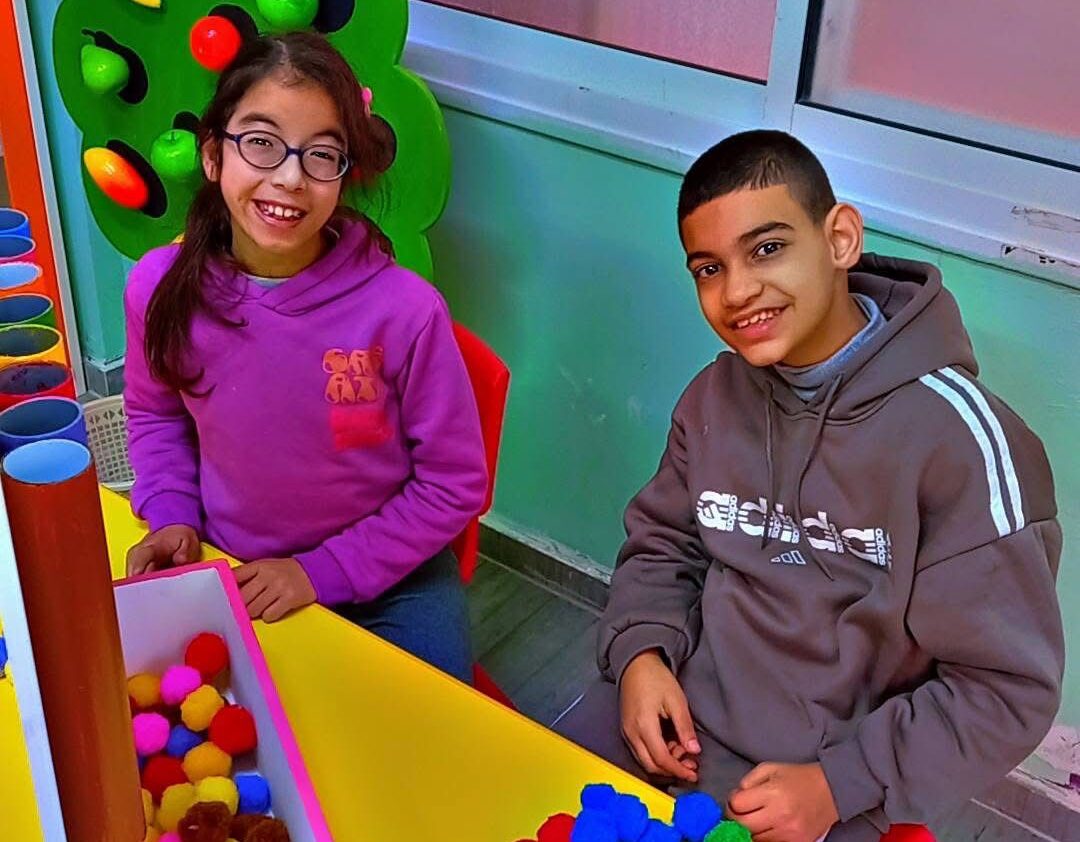
Developing these tools is an important part of ABCD’s mission to make rehabilitation fun, accessible, and effective – and Arooba’s work has already had an amazing impact. Her sensory tools are helping transform the lives of children in Palestine, supporting them to strengthen their skills and build their confidence. Crucially, this enables children to interact more easily with siblings, friends, and the wider community.